Unlock Your Fitness Potential: The Ultimate Custom Hybrid Training Plan Guide
Custom Hybrid Training Plan: How to Build One That Actually Works for You
If you have ever tried to be both a runner and a lifter at the same time, you know the struggle. You want strong legs, but you also want to finish a 10k without your legs giving out. This is exactly why more people are turning to a custom hybrid training plan.
A custom hybrid training plan mixes strength training and endurance training into one smart program. But the "custom" part matters just as much as the "hybrid" part. Your body, your goals, and your schedule are not the same as anyone else's. So your plan shouldn't be either.
In this guide, we will break down what a custom hybrid training plan really is, why personalization matters so much, and how to build one step by step. We will also look at real examples and tools that can help you along the way.
---
Defining Key Concepts
What is a Custom Hybrid Training Plan?
A custom hybrid training plan is a workout program that blends two or more types of training — usually strength training and cardio/endurance training — while adjusting the details to fit the person doing it.
This is sometimes called "concurrent training." It can also include mobility work, functional movement, and planned recovery days.
Sources describe hybrid training as more than just doing a bit of everything. It is a structured approach where different training styles work together instead of against each other.
- - source: https://www.polar.com/en/journal/hybrid-athlete
- - source: https://www.onepeloton.com/blog/hybrid-training
- - source: https://www.womenshealthmag.com/uk/fitness/a45453979/hybrid-training/
- - source: https://www.myprotein.com/thezone/training/hybrid-training-programme/
- - source: https://ca.repfitness.com/blogs/training/build-a-hybrid-training-program
Why do people choose this style of training?
- It builds overall fitness, not just one skill.
- It supports heart health and muscle growth at the same time.
- It lets you chase more than one goal at once — like getting stronger and running faster.
- - source: https://www.polar.com/en/journal/hybrid-athlete
- - source: https://www.onepeloton.com/blog/hybrid-training
- - source: https://sweat.com/blogs/fitness/hybrid-training
- - source: https://ca.repfitness.com/blogs/training/build-a-hybrid-training-program
But there is a catch. If the strength and cardio sessions are not planned carefully, they can cancel each other out. That's why programming — the order and timing of your workouts — is so important.
- - source: https://www.polar.com/en/journal/hybrid-athlete
- - source: https://www.puregym.com/blog/hybrid-training/
- - source: https://www.risewithlana.com/blog/what-is-hybrid-training-tips-benefits-amp-challenges-of-a-hybrid-fitness-program-plus-a-sample-training-plan
Breaking Down Related Terms
Personalized Training Plan
A plan built around your own assessment, goals, and any injuries or limits you have. Instead of copying a generic program, the exercises and progression are chosen just for you.
Adaptive Workout Plan
A plan that changes as you change. If you get stronger, tired, or busier, the workouts shift too. Most experts recommend checking in and adjusting your plan every few weeks.
Individualized Running Plan
A running schedule matched to your specific goal — whether that's endurance, speed, or simply recovering well between sessions. This usually includes a mix of easy runs, tempo runs, interval runs, and long runs.
- - source: https://www.myprotein.com/thezone/training/hybrid-training-programme/
- - source: https://www.risewithlana.com/blog/what-is-hybrid-training-tips-benefits-amp-challenges-of-a-hybrid-fitness-program-plus-a-sample-training-plan
- - source: https://tailoredcoachingmethod.com/hybrid-athlete-training-guide/
Personalized Strength Training Plan
A resistance program built around your strength goals. It usually centers on big, multi-muscle lifts and gradual progression, with enough recovery time built in.
- - source: https://www.polar.com/en/journal/hybrid-athlete
- - source: https://www.onepeloton.com/blog/hybrid-training
- - source: https://www.puregym.com/blog/hybrid-training/
Together, these four ideas — personalized, adaptive, individualized running, and personalized strength — are really just different pieces of the same puzzle: a plan made for you, not for everyone.
---
The Benefits of a Custom Hybrid Training Plan
Why choose a hybrid approach instead of just picking one type of training? Because trying to do "only cardio" or "only lifting" forces you to trade one goal for another. Hybrid training trains multiple systems in your body at the same time.
- - source: https://www.polar.com/en/journal/hybrid-athlete
- - source: https://www.onepeloton.com/blog/hybrid-training
- - source: https://sweat.com/blogs/fitness/hybrid-training
- - source: https://ca.repfitness.com/blogs/training/build-a-hybrid-training-program
Key benefits include:
- Building strength and stamina at the same time, instead of choosing one.
- Creating a more balanced, well-rounded body.
- Avoiding the boredom of doing the same type of workout every day.
- - source: https://www.onepeloton.com/blog/hybrid-training
- - source: https://www.womenshealthmag.com/uk/fitness/a45453979/hybrid-training/
- - source: https://sweat.com/blogs/fitness/hybrid-training
Why personalization boosts your results
A plan matched to your current fitness level, schedule, and recovery ability is far more likely to succeed than a generic template.
- - source: https://www.myprotein.com/thezone/training/hybrid-training-programme/
- - source: https://www.puregym.com/blog/hybrid-training/
Tracking your progress and adjusting the plan over time also makes it more sustainable. This is the core idea behind an adaptive workout plan — it grows and shifts with you, instead of staying frozen in place.
What about injury risk?
While no source promises that hybrid training eliminates injuries, the guidance consistently points to smart load management as the real protective factor. This means:
- Getting enough rest between hard sessions.
- Balancing how much strength and cardio work you do.
- Starting with a manageable number of weekly sessions rather than doing too much too soon.
- - source: https://www.polar.com/en/journal/hybrid-athlete
- - source: https://www.puregym.com/blog/hybrid-training/
- - source: https://www.risewithlana.com/blog/what-is-hybrid-training-tips-benefits-amp-challenges-of-a-hybrid-fitness-program-plus-a-sample-training-plan
In short: it's not the hybrid style itself that lowers injury risk. It's the careful planning and recovery built into a good custom plan.
For people comparing their options
If you're deciding whether to hire a coach, use an app, or follow a template, know that hybrid fitness is increasingly tied to digital coaching tools and customizable programs that make this decision easier.
- - source: https://www.traintoadapt.co.uk/news/why-hybrid-fitness-is-the-future-of-personal-training/
- - source: https://www.onepeloton.com/blog/hybrid-training
---
How to Design and Implement Your Plan
Building a custom hybrid training plan isn't complicated once you break it into steps. Here's how to do it.
Step 1: Start With an Honest Assessment
Before writing a single workout, figure out these things:
- Your current fitness level
- Your primary goal (strength, running, or both)
- How many days per week you can actually train
- Any injury history or movement limits
- Your recovery capacity (sleep, stress, life demands)
- Whether strength or running is your main priority
- - source: https://www.myprotein.com/thezone/training/hybrid-training-programme/
- - source: https://www.puregym.com/blog/hybrid-training/
This step is the foundation of a true personalized training plan. Skip it, and you're just guessing.
Step 2: Build a Weekly Structure
Once you know your starting point, build your week around these core pieces:
- Strength training — compound movements like squats, deadlifts, bench press, and pull-ups
- Endurance training — running, cycling, or rowing
- Mobility and flexibility work
- Rest and recovery days
- - source: https://www.polar.com/en/journal/hybrid-athlete
- - source: https://www.onepeloton.com/blog/hybrid-training
- - source: https://www.myprotein.com/thezone/training/hybrid-training-programme/
- - source: https://www.puregym.com/blog/hybrid-training/
Step 3: Follow Smart Programming Rules
- Do strength training first if you're combining it with cardio in the same session.
- source: https://www.puregym.com/blog/hybrid-training/ - Keep your hardest strength day and hardest cardio day separate when you can.
- source: https://www.polar.com/en/journal/hybrid-athlete - Leave at least 48 hours between two very demanding sessions.
- source: https://www.polar.com/en/journal/hybrid-athlete
- source: https://tailoredcoachingmethod.com/hybrid-athlete-training-guide/ - Progress your plan every 4 to 6 weeks based on how you're recovering and improving.
- source: https://www.puregym.com/blog/hybrid-training/ - Adjust your frequency and intensity to match your goal and fitness level.
- source: https://www.myprotein.com/thezone/training/hybrid-training-programme/
Step 4: Build Your Individualized Running Plan
Running isn't one-size-fits-all either. A good individualized running plan uses different types of runs for different purposes:
- Easy aerobic runs — build your base without wearing you out
- Long runs — build endurance for longer distances
- Tempo or threshold runs — teach your body to hold a faster pace
- Interval or sprint work — build speed and power
- - source: https://www.myprotein.com/thezone/training/hybrid-training-programme/
- - source: https://www.risewithlana.com/blog/what-is-hybrid-training-tips-benefits-amp-challenges-of-a-hybrid-fitness-program-plus-a-sample-training-plan
Mixing these types (instead of running the same pace every time) is what makes a running plan truly progressive.
Step 5: Build Your Personalized Strength Training Plan
For strength, the advice is simple but powerful: anchor your program around compound lifts and progressive overload (gradually lifting more weight or doing more reps over time).
Most guidance suggests 2–3 strength sessions per week, depending on your bigger goal.
- - source: https://www.polar.com/en/journal/hybrid-athlete
- - source: https://www.onepeloton.com/blog/hybrid-training
- - source: https://www.myprotein.com/thezone/training/hybrid-training-programme/
- - source: https://www.puregym.com/blog/hybrid-training/
If running is your main focus, you might do 2 strength sessions to support your legs and core. If strength is your main focus, you might do 3, with running used to support recovery and heart health.
Real Examples of Custom Hybrid Plans
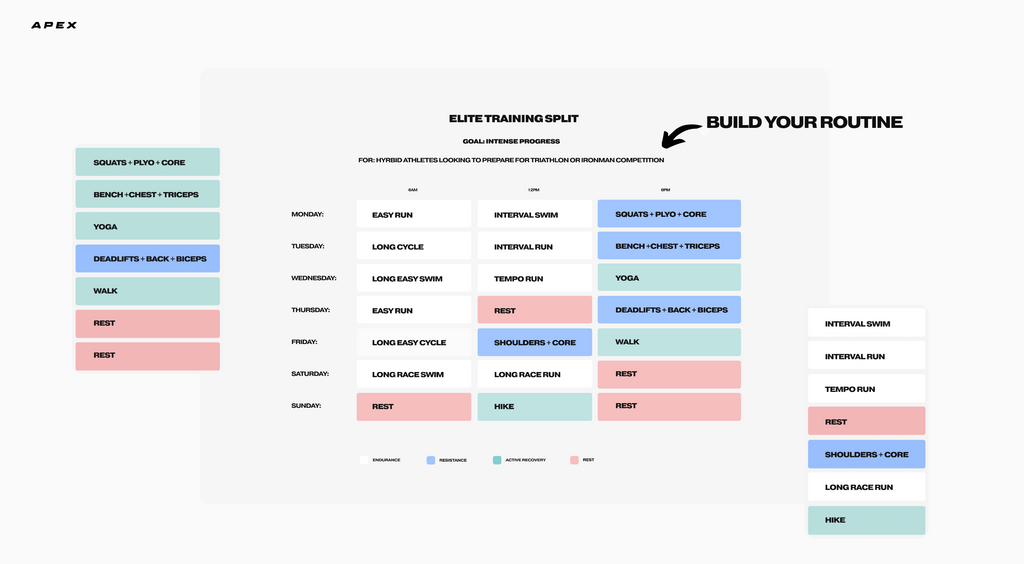
Seeing real examples makes this easier to picture. Here are a few structures pulled from expert sources:
- Alternating structure — heavy strength days and cardio days spread across the week so neither one overlaps.
- source: https://www.onepeloton.com/blog/hybrid-training - Strength-and-running week — a mix of rest, an easy run, a tempo run, a long run, and strength days, arranged carefully to manage tiredness.
- source: https://www.risewithlana.com/blog/what-is-hybrid-training-tips-benefits-amp-challenges-of-a-hybrid-fitness-program-plus-a-sample-training-plan - 12-week phased program — moving through a foundation phase, a volume phase, and a peak-performance phase.
- High-low strategy — clustering your hardest lifting and hardest running on the same day, so the rest of the week has more room to recover.
- source: https://tailoredcoachingmethod.com/hybrid-athlete-training-guide/
The lesson from all these examples is the same: successful hybrid plans are never random. They are sequenced on purpose to manage tiredness and protect performance.
- - source: https://www.polar.com/en/journal/hybrid-athlete
- - source: https://www.puregym.com/blog/hybrid-training/
- - source: https://www.risewithlana.com/blog/what-is-hybrid-training-tips-benefits-amp-challenges-of-a-hybrid-fitness-program-plus-a-sample-training-plan
- - source: https://tailoredcoachingmethod.com/hybrid-athlete-training-guide/
---
Tools, Resources, and Expert Guidance
You don't have to build your custom hybrid training plan completely alone. There are more tools available now than ever before, including digital coaching, customizable apps, and hybrid personal training services that mix in-person and online support.
- - source: https://www.onepeloton.com/blog/hybrid-training
- - source: https://www.traintoadapt.co.uk/news/why-hybrid-fitness-is-the-future-of-personal-training/
One expert source points out that modern hybrid fitness models now combine face-to-face coaching with digital tools, giving people more flexibility while still getting expert guidance.
- - source: https://www.traintoadapt.co.uk/news/why-hybrid-fitness-is-the-future-of-personal-training/
Here's a simple way to compare your options:
| Option Type | Best For | What to Look For |
|---|---|---|
| Personalized training plan service | People who want a full plan built around their goals | Assessment, goal-based programming, progression, regular check-ins |
| Adaptive workout plan platform | People who want their workouts to shift based on feedback | Auto-adjustment, tracking, recovery-based changes, progress reviews |
| Hybrid coaching / hybrid athlete program | People balancing running and lifting | Session separation, strength-endurance balance, recovery management |
| App-based fitness tools | People who want convenience and ongoing support | Customization features, workout generation, logging, adaptability |
How to choose between them
Ask yourself:
- Do I need more structure, or more flexibility?
- Do I want a fixed program, or one that adapts as I progress?
- Do I need expert help balancing running volume with lifting load?
- - source: https://www.polar.com/en/journal/hybrid-athlete
- - source: https://www.puregym.com/blog/hybrid-training/
- - source: https://www.traintoadapt.co.uk/news/why-hybrid-fitness-is-the-future-of-personal-training/
Your answers will point you toward the right type of support — whether that's a coach, an app, or a downloadable plan.
---
Call to Action
Whatever your training identity is — runner, lifter, or hybrid athlete — the next step is simple: choose a plan that matches where you are right now, not where a stranger's plan assumes you should be.
- - source: https://www.onepeloton.com/blog/hybrid-training
- - source: https://www.risewithlana.com/blog/what-is-hybrid-training-tips-benefits-amp-challenges-of-a-hybrid-fitness-program-plus-a-sample-training-plan
Since progression and recovery matter so much, look for options that let you start at the right volume and intensity — whether that's a consultation, a trial plan, a downloadable template, or a guided app.
- - source: https://www.puregym.com/blog/hybrid-training/
- - source: https://www.traintoadapt.co.uk/news/why-hybrid-fitness-is-the-future-of-personal-training/
Ready to take the next step? Choose one:
- Get a personalized training plan built around your specific goals
- Try an adaptive workout plan that adjusts as you improve
- Build an individualized running plan with the right mix of paces
- Design a personalized strength training plan anchored in compound lifts
- - source: https://www.myprotein.com/thezone/training/hybrid-training-programme/
- - source: https://www.puregym.com/blog/hybrid-training/
Tell us in the comments:
- What is your main goal right now?
- What does your weekly schedule actually look like?
- Do you prioritize running, strength, or both equally?
- What has (or hasn't) worked for you in past training plans?
---
Conclusion
A custom hybrid training plan works because it combines strength and endurance in a way that fits you — not a generic version of you. It doesn't force you to choose between getting stronger and getting fitter for endurance. It lets you build both.
- - source: https://www.polar.com/en/journal/hybrid-athlete
- - source: https://www.onepeloton.com/blog/hybrid-training
- - source: https://www.womenshealthmag.com/uk/fitness/a45453979/hybrid-training/
- - source: https://www.myprotein.com/thezone/training/hybrid-training-programme/
- - source: https://sweat.com/blogs/fitness/hybrid-training
The best plans always include three things: steady progression, planned recovery, and thoughtful session ordering. Without these, even a well-designed hybrid plan can lead to burnout.
- - source: https://www.polar.com/en/journal/hybrid-athlete
- - source: https://www.puregym.com/blog/hybrid-training/
- - source: https://www.risewithlana.com/blog/what-is-hybrid-training-tips-benefits-amp-challenges-of-a-hybrid-fitness-program-plus-a-sample-training-plan
- - source: https://tailoredcoachingmethod.com/hybrid-athlete-training-guide/
At the end of the day, personalization isn't just a bonus feature you pay extra for. It's actually the thing that makes hybrid training work long-term. It's the difference between a plan you quit after two weeks and one you can stick with for years.
- - source: https://www.puregym.com/blog/hybrid-training/
- - source: https://www.traintoadapt.co.uk/news/why-hybrid-fitness-is-the-future-of-personal-training/
So start with your own goals, your own schedule, and your own body. Build (or find) a plan around those — and let it grow and change as you do.